
Badrinath
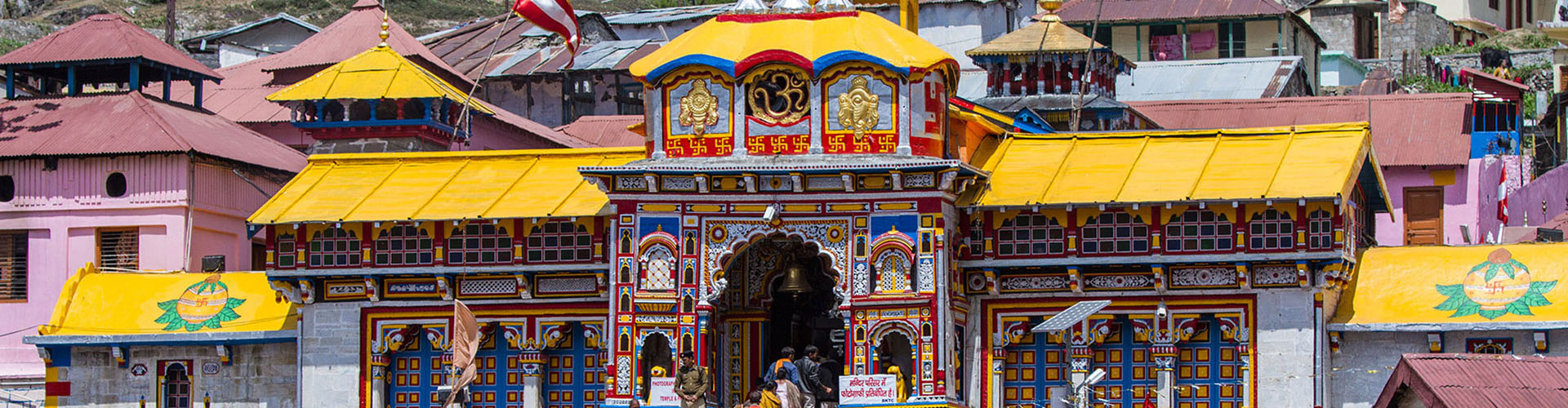
Badrinath is where divinity meets the serenity of nature. Located in the Chamoli district of Uttarakhand, the exceptional mansion of Vishnu at 3,133 meters high is one of the holiest shrines in Chatham, India. Other Char Dham sites include Dwarka, Puri, and Rameswaram.
Vishnu’s pious land is located between Nar and Narayan, and also belongs to Chota Chardham Yatra in Uttarakhand. Starting at Yamunotri, Gangotri, Kedarnath, Badrinath is the last and most famous stop of the Himalayan Garhwal pilgrimage. The Badrinath Dham is easily accessible from the highway and the Badrinath temple is easily accessible on foot. The village of Mana, about 3 km from Badrinath, is one of the last villages after the end of the Indian border and before the start of the Tibetan border. The peak of Neelkanth stands still and radiates powerful energy for all pilgrims and travelers.
Badrinath is a land of countless legends, each one only increasing the light of this place. Along with this legend, the snow-capped mountains, the gracefully flowing Alaknanda River, and the breathtaking views create the perfect backdrop for nurturing spiritual connections.
What to see at the Badrinath?
Badrinath Temple
The ancient texts pay great homage to the estate of Lord Vishnu, saying: Its rich history lies along the Alakananda River. As Vishnu’s most important shrine, Badrinath Shrine is said to have been founded by Adi Shankaracharya. He discovered that the Sarigram idol of Lord Vishnu was flowing in the waters of Alakananda and placed it in a cave near Tapt Kund.
A Garhwal King ordered the construction of a temple in the 16th century to hold the figure of God. The temple has undergone numerous repairs because of avalanches and earthquake damage, leading to the current structure. A black stone statue of Lord Vishnu in a meditation position can be seen worshipped with statues of other deities such as Nar, Narayana, Narad, Ganesha, Garud, and Kuber. The Lord Badri idol is moved to Yogadhyan Badri near Pandukeshwar during the winter (Chamoli district).
History of Badrinath Template
The indigenous term Badri, which refers to a particular kind of wild berry, is where the name of the Badrinath tirtha comes from. It is believed that Goddess Laxmi assumed the shape of a berry tree to protect Lord Vishnu from the scorching sun while He was performing penance in these mountains. Numerous pilgrims, saints, and sages meditate here in search of enlightenment, and it is not simply the Lord’s dwelling place.
Best time to visit Badrinath
Badrinath has a cool and cold climate almost all year round. The peak seasons to visit this place are May-June and September-October. At the beginning of the monsoon season in Badrinath, you can see heavy rains and a drop in temperature. Winter the temple closed and the idol of the Badrinath come down to Joshimath.
How to reach Badrinath
By Air
Badrinath is well connected with Helicopter Sewa from Gauchar and Dehradun. You can reach Jolly Grand airport (Dehradun) from there you can take a chopper to Badrinath.
By train
Yog Nagri Rishikesh is nearest Raily station and from Rishikesh you can get by a bus or taxi.
By Road
Badrinath is closely connected to highways to major destinations in Uttarakhand
Things to do in Badrinath
Skiing at Auli
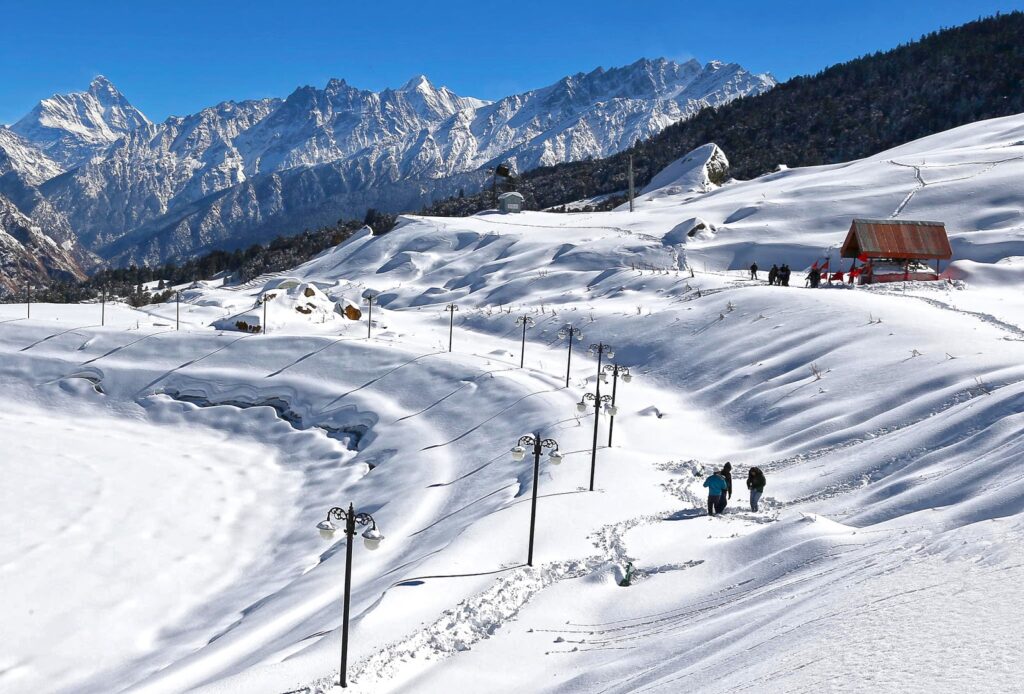
From the imposing Badrinath at 3,300 meters or about 11,000 feet above sea level, it takes less than two hours to reach the duck tourist center of Uttarakhand. This is where it snows in winter. Therefore, skiing is one of the most common tourist and adventure activities in the region. Skiing the stunning slopes of the Himalayas, this ski resort is very close to Joshimath and can be reached by cable car. It is also an interesting way to see the eyes.
Majestic Vasundhara Falls
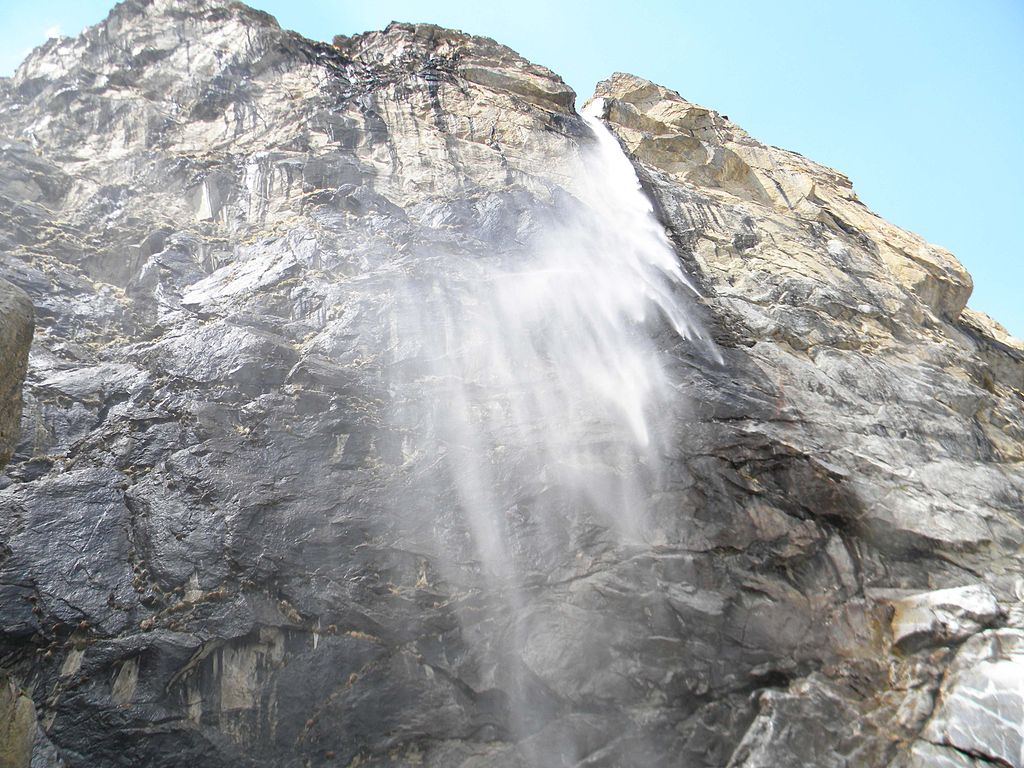
The water drops 400 feet in this beautiful spot in the town of Mana. As it is located less than 4 km from the city of Badrinath, it is one of the best things to do in Badrinath. In mythology, it is considered Pandava’s final resting place before Swargarohini. It is not only a place of adventure for pilgrims, but also a sanctuary. If the spectator’s mind is not clean, the water droplets will flow back!
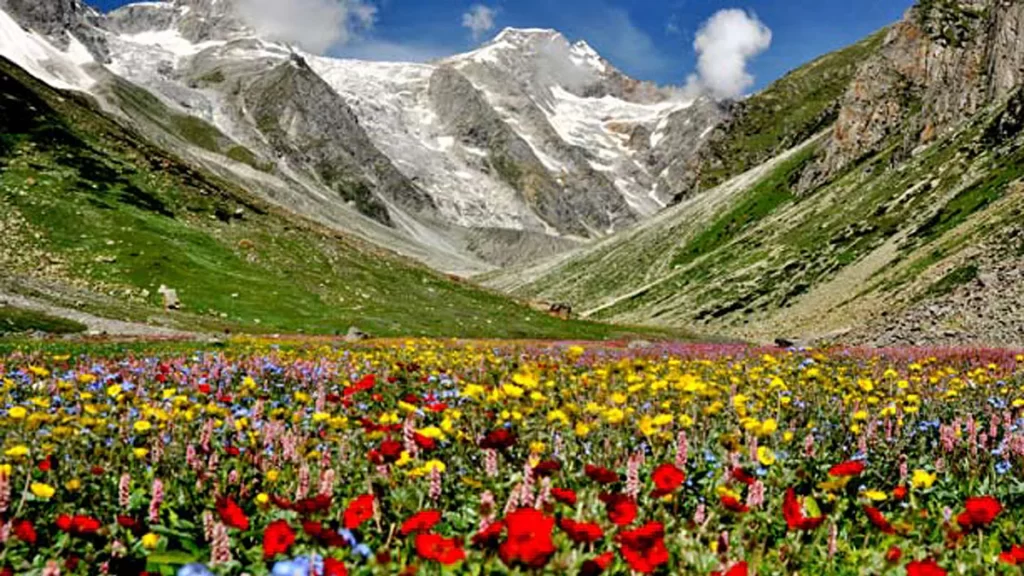
Valley of Flowers National Park
This famous valley of flowers national park is a wonderful vast territory with a variety of plants. Countless alpine flowers bloom in beautiful pastures and valleys. Easily accessible from Badrinath and Joshimath, this is a very peaceful place for the soul. You can also hike to the Valley of Flowers along the Pushpawati River. The road has ice lakes, mountains, small bridges, and running water and the trail goes through the jungle. It is listed as a World Heritage Site by UNESCO. It is a wild Himalayan blooming flower amidst the Himalayas.
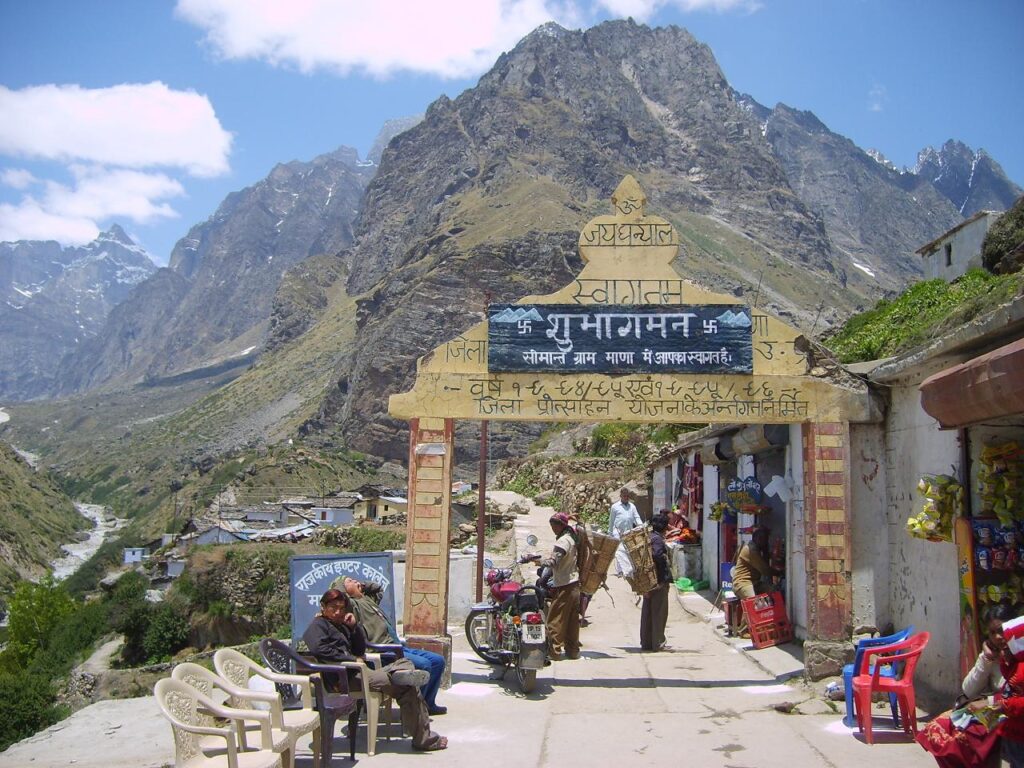
Mana Village
This “last Indian village” is located along NH-58 at a height of 3200 meters above sea level. The “final tea store of India” can be found on the fringe of the picturesque village at the conclusion. The Vasundhara Falls and the Bheem Pul, which are thought to have been built by the powerful Bheem, are just two of the village’s many attractions. This settlement serves as the boundary between Tibet, China, and India. Because of this, the government of Uttarakhand has named this “tourist village” in the Chamoli district the “Last Indian Village.” The Village is conveniently located approximately 3 to 4 kilometers from the popular pilgrimage spot of Badrinath.